
Preparing for Patient-Centered Medical Home (PCMH) recognition requires more than completing forms and gathering documentation. Your practice needs workflows, care processes, performance measures, team responsibilities, and patient-centered systems that support the PCMH model.
Healthcare Revenues provides practical PCMH consulting services to help healthcare practices understand PCMH requirements, identify gaps, improve workflows, organize documentation, and prepare for recognition and ongoing reporting.
A Patient-Centered Medical Home (PCMH) is a care delivery model designed to put patients at the center of their healthcare while improving communication, coordination, access, and quality across the practice.
The model emphasizes strong relationships between patients and care teams, coordinated services, ongoing care management, and continuous quality improvement.
For practices pursuing NCQA PCMH Recognition, the current framework is organized around six major concept areas:

Healthcare practices are under increasing pressure to improve quality, coordinate care, manage chronic conditions, engage patients, and demonstrate measurable performance.
A well-designed PCMH approach can help practices establish more consistent processes for:
PCMH also gives practices a framework for bringing clinical teams, administrative staff, technology, and quality improvement efforts together.
Instead of treating quality initiatives as separate projects, practices can build them into everyday operations.
Healthcare Revenues provides PCMH consulting support designed around the operational needs of healthcare practices.
Our services can help your organization move from understanding PCMH requirements to implementing the processes and documentation needed to support recognition.
The PCMH model is organized around six major areas of practice performance.
A successful PCMH requires clearly defined roles, responsibilities, leadership, and communication across the care team. Healthcare Revenues helps practices establish processes that support effective teamwork and patient-centered care.
Practices need reliable information about their patient populations to provide appropriate care. This area includes processes related to patient information, medication reconciliation, clinical decision support, population management, and understanding patient needs.

Patients should have appropriate access to care and continuity with their healthcare team. We help practices review access, communication, scheduling, and continuity processes.
Care management processes help practices identify patients who need additional support and provide structured follow-up and care planning.

Patients often move between primary care, specialists, hospitals, and other healthcare settings. Effective coordination helps ensure that relevant in

PCMH practices need processes for measuring performance and using the results to improve care. Healthcare Revenues helps practices establish a continuous approach to performance monitoring and quality improvement.
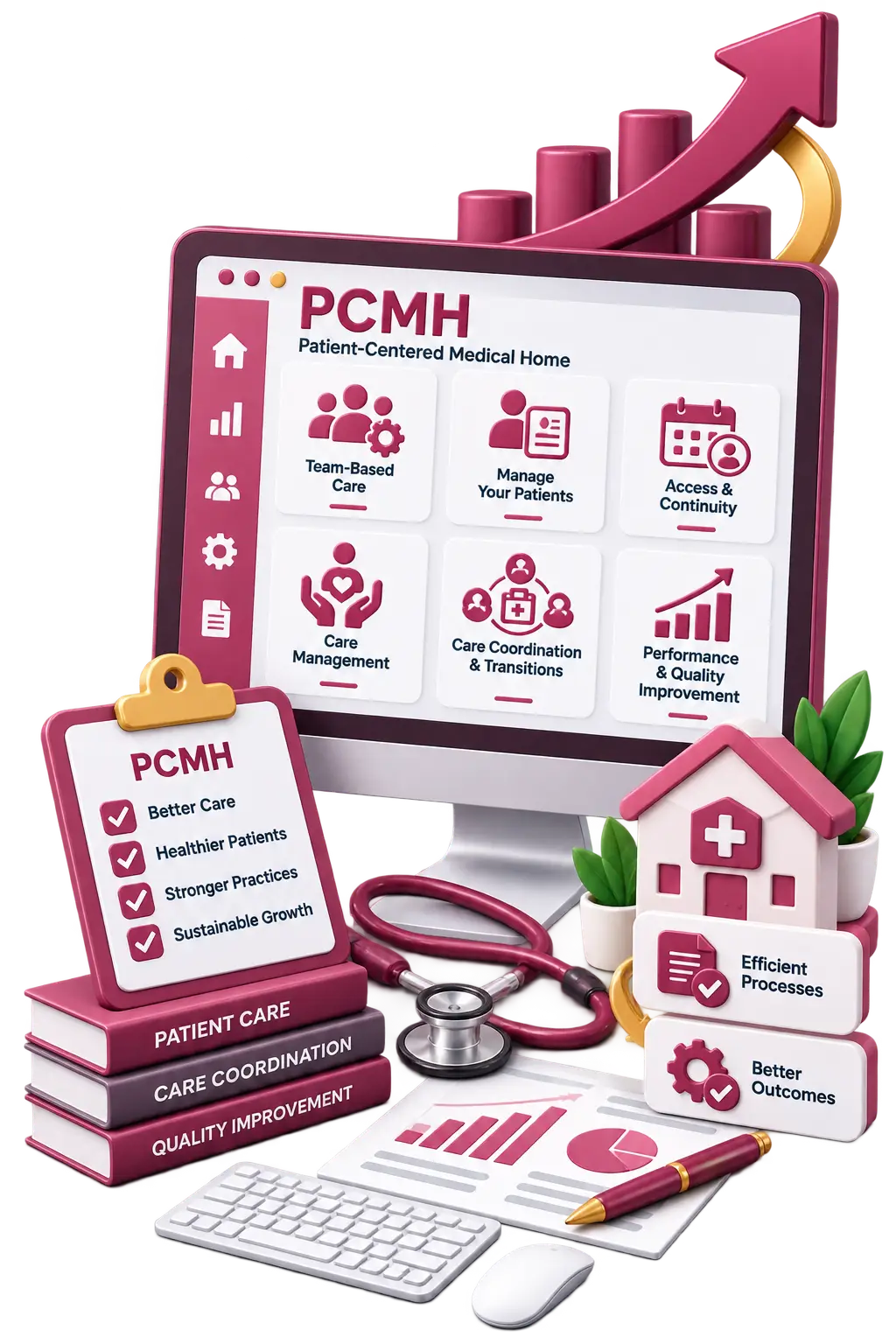

PCMH consulting can be valuable for practices that are preparing for recognition, undergoing practice transformation, or looking to strengthen their existing quality and care coordination processes.
Our services can support:
If your practice is considering PCMH recognition or wants to improve its patient-centered
PCMH transformation involves multiple areas of your practice. Our process is designed to keep the work organized and manageable.




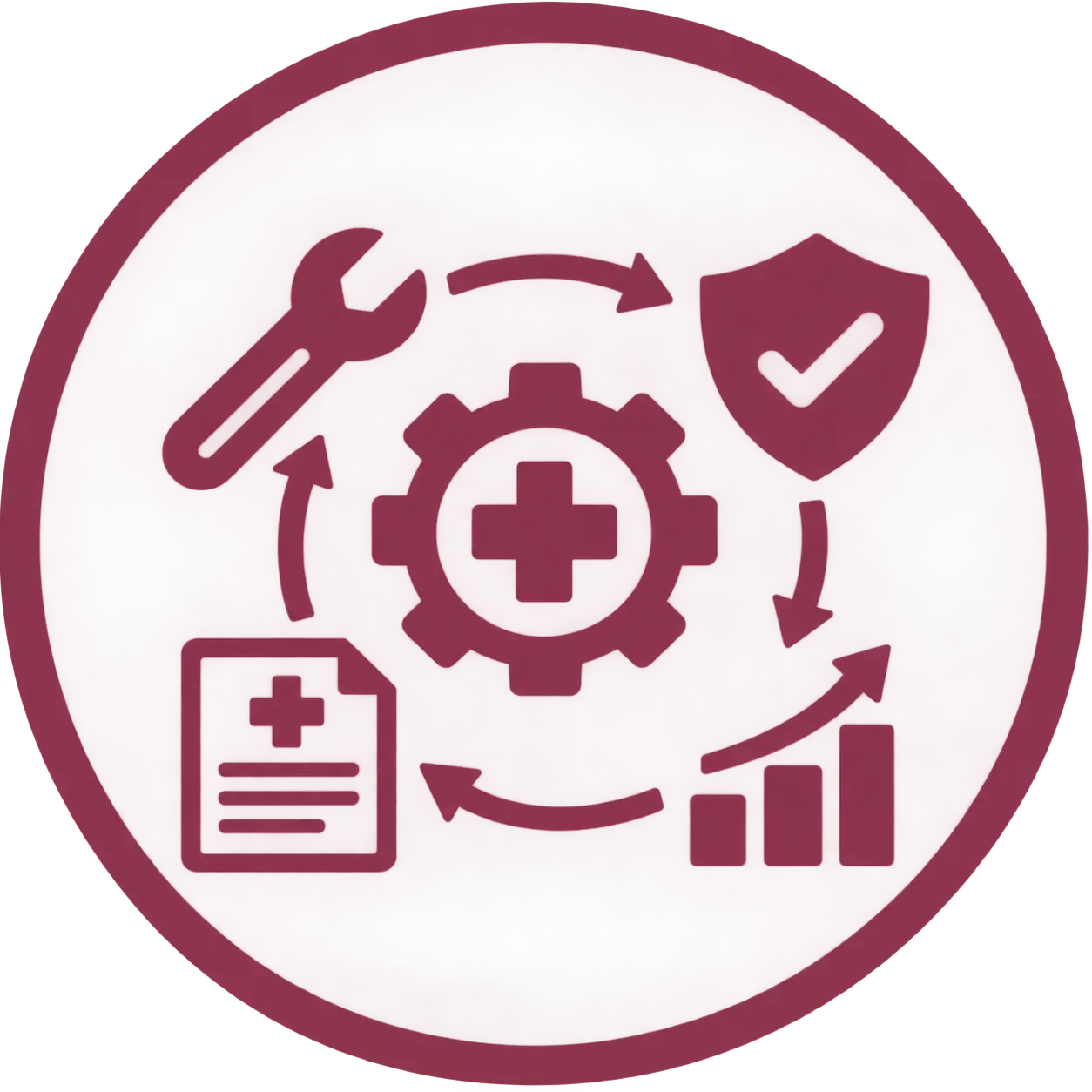
PCMH requirements can involve significant documentation, workflow changes, and coordination across your organization. Professional support can help your team stay organized.
A structured readiness assessment can identify potential issues before they become obstacles during the recognition process.
Better referral, transition, and communication processes can help reduce gaps between providers and care settings.
Patient-centered workflows help practices better understand and respond to patient needs, preferences, and goals.
A structured quality improvement process helps practices use performance information to identify opportunities for better care.
The objective is not simply to prepare documents for recognition. Practices need workflows that can continue operating after the recognition process.
PCMH and MIPS are separate programs and should not be treated as interchangeable. However, many of the operational activities that support one can also strengthen a practice’s broader quality management strategy.
Areas such as:
can overlap with broader quality and performance initiatives.
Healthcare Revenues can help practices coordinate these efforts instead of managing each initiative as a completely separate project.
PCMH practices often focus heavily on preventive care, chronic condition management, care coordination, and population health.
HEDIS measures also evaluate important areas of healthcare quality and outcomes.
While PCMH and HEDIS are different frameworks, practices can benefit from aligning their quality improvement workflows where appropriate.
Healthcare Revenues can help organizations create a more coordinated approach to:
PCMH transformation focuses primarily on care delivery, patient experience, coordination, and quality improvement, while revenue cycle management focuses on the financial side of healthcare operations.
However, both depend on effective practice workflows.
Scheduling, registration, documentation, patient communication, coding, claims, and reporting all contribute to the overall efficiency of a medical practice.
Healthcare Revenues combines PCMH consulting with broader healthcare revenue-cycle expertise to help practices look at operational improvement from both the clinical and financial perspectives.
Recommended Internal Links:

PCMH is strongly associated with primary care, but healthcare organizations increasingly use patient-centered care, coordination, quality improvement, and population health principles across different practice environments.
Healthcare Revenues can support applicable practices and healthcare organizations across specialties such as:









PCMH transformation affects more than one department.
It can involve providers, clinical staff, administrative teams, quality personnel, technology systems, patient communication, and practice leadership.
Healthcare Revenues brings experience across healthcare operations, including:
This broader perspective allows us to look at PCMH within the context of your overall practice rather than treating recognition as an isolated administrative project.
Our goal is to help your practice build processes that support patient-centered care, measurable quality improvement, coordinated workflows, and sustainable operations.

PCMH consulting provides professional guidance to help healthcare practices understand Patient-Centered Medical Home requirements, assess their current operations, improve workflows, organize documentation, implement quality improvement processes, and prepare for applicable recognition or reporting requirements.
PCMH stands for Patient-Centered Medical Home. It is a healthcare delivery model focused on patient-centered care, team-based care, access, care coordination, care management, and continuous quality improvement.
NCQA PCMH Recognition is a formal recognition program that evaluates healthcare practices against established Patient-Centered Medical Home standards and criteria.
Eligibility depends on the applicable PCMH program requirements. Generally, eligible practices provide primary care and have clinicians who meet the program’s requirements. Practices should review the current recognition criteria before beginning the process.
The current PCMH framework is organized around six major concept areas:
The timeline varies depending on the practice’s current level of readiness, the recognition pathway, available documentation, workflow changes required, and the resources dedicated to the project.
A readiness assessment can provide a clearer understanding of the work required before beginning the recognition process.
Yes. PCMH programs can apply to eligible practices of different sizes. Smaller practices may benefit from structured consulting support because they often have fewer internal resources dedicated to quality improvement and recognition preparation.
Yes. Continuous quality improvement is an important component of the PCMH model. Practices are expected to measure performance, identify opportunities for improvement, and implement processes designed to improve care.
No. PCMH and MIPS are different programs and frameworks.
PCMH focuses on transforming how a practice delivers patient-centered, coordinated care, while MIPS is part of the CMS Quality Payment Program and evaluates eligible clinicians through applicable performance requirements.
However, some practice activities can support both broader PCMH and MIPS objectives.
Yes. PCMH and HEDIS are different frameworks, but practices can align certain quality improvement, preventive care, chronic care, patient outreach, and performance measurement processes where appropriate.
Healthcare Revenues provides PCMH consulting support to help practices assess readiness, identify gaps, improve workflows, organize documentation, and prepare for applicable PCMH recognition and reporting requirements.
PCMH transformation does not have to become another overwhelming project for your team.
Healthcare Revenues can help you understand the requirements, identify operational gaps, improve practice workflows, organize supporting documentation, and build a sustainable approach to patient-centered care and quality improvement.
Get the support your practice needs to move forward with confidence.