Remote Patient Monitoring (RPM) uses connected medical devices to collect patient physiologic data outside the traditional clinical setting and transmit that information to healthcare providers for review and management.
Healthcare Revenues provides Remote Patient Monitoring support for physicians, medical practices, specialty practices, clinics, and healthcare organizations across the United States.
Our RPM services support patient enrollment, device coordination, monitoring workflows, patient communication, data review processes, documentation, and applicable billing workflows.
RPM may support the ongoing management of patients whose conditions require regular monitoring between in-person visits. Healthcare Revenues will work within your organization’s established clinical workflows and applicable payer requirements.
Remote Patient Monitoring is a healthcare service that allows certain patient physiologic data to be collected remotely through connected medical devices and made available to healthcare providers for review and management.
Depending on the patient’s condition and the RPM program, devices may collect information such as:
The specific device and data collected depend on the patient’s condition, clinical requirements, and the RPM program established by the healthcare organization.
RPM allows healthcare providers to receive relevant patient data outside the traditional office setting and incorporate that information into appropriate clinical management.
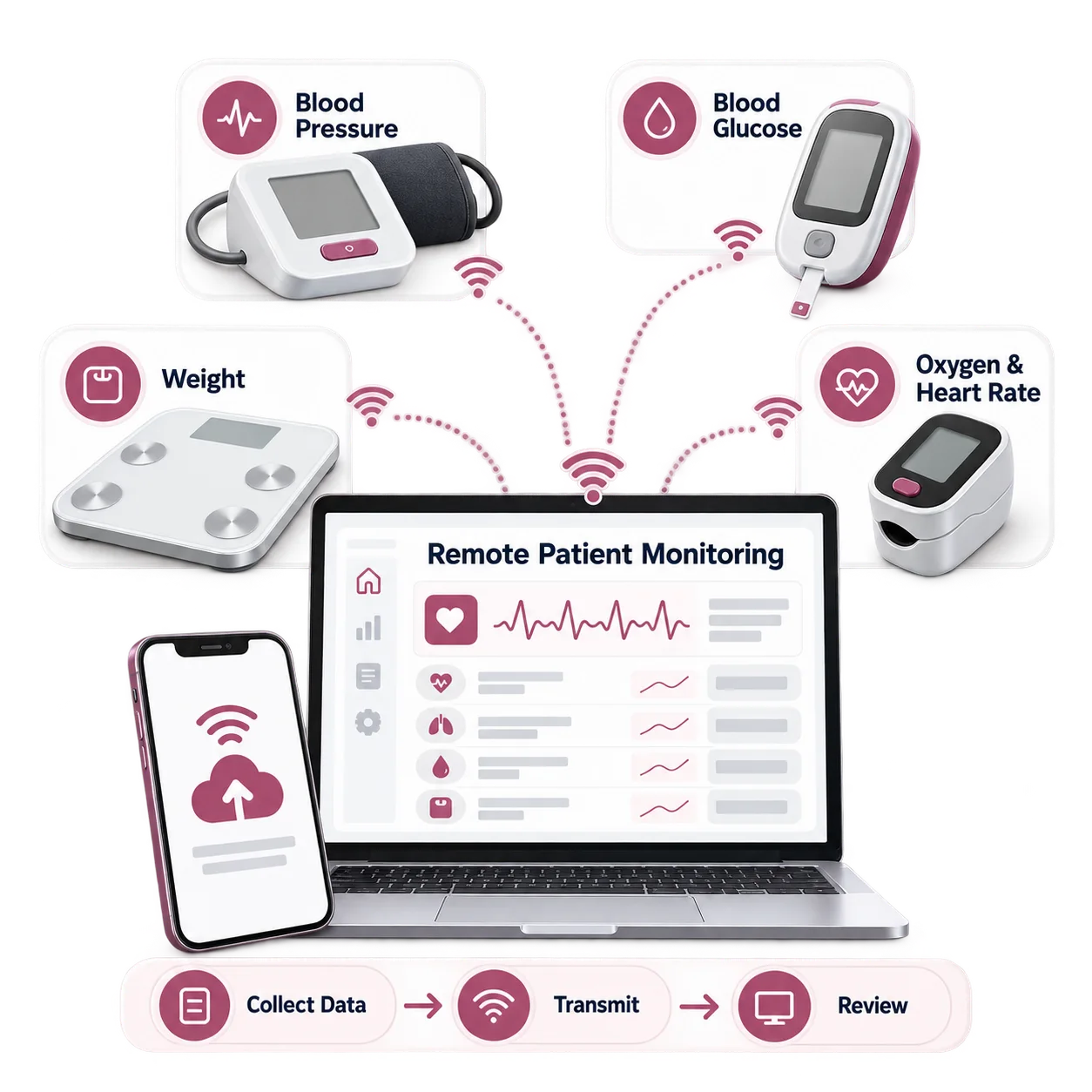
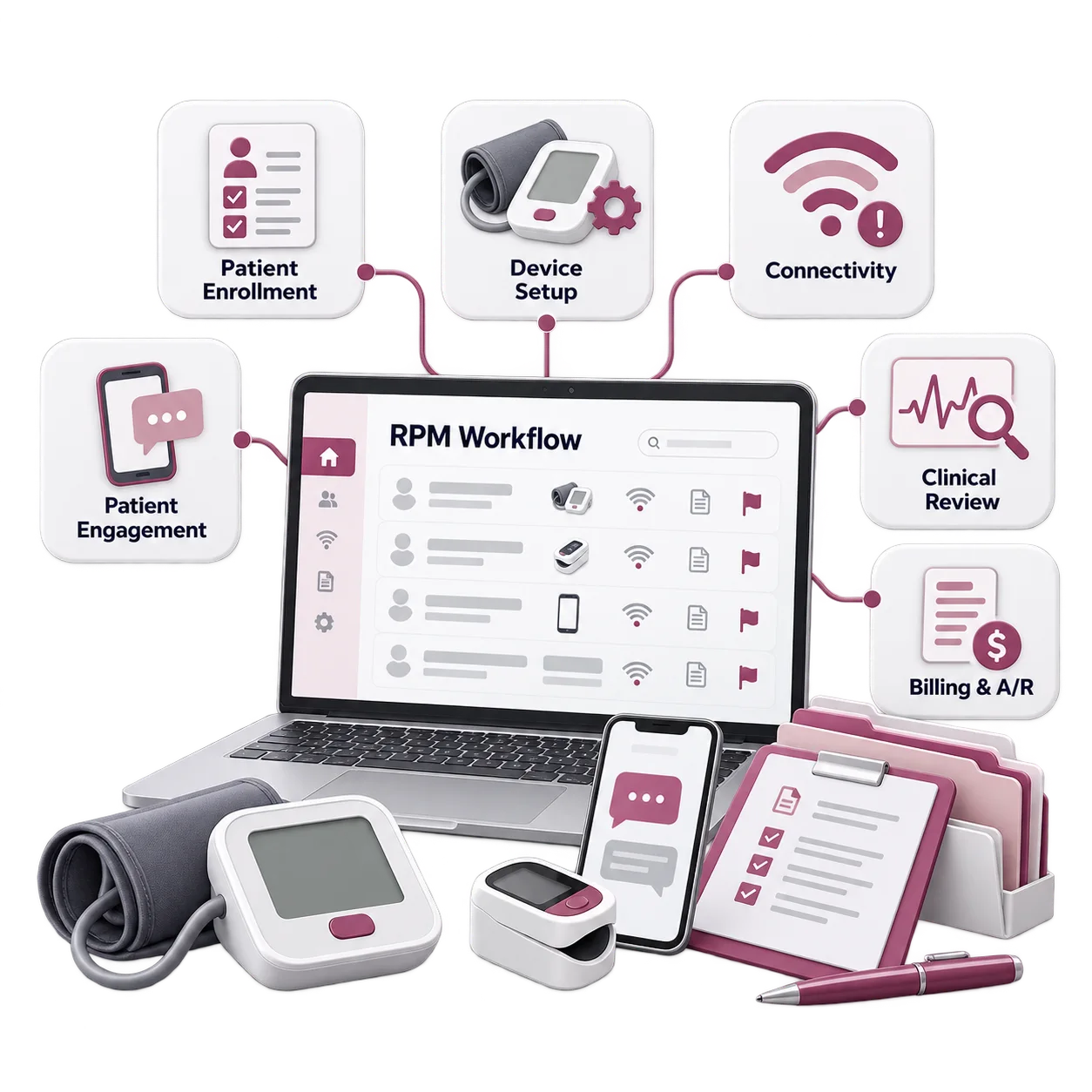
A typical RPM workflow may include:
Patient Identification → Eligibility Review → Enrollment → Device Setup → Patient Training → Data Collection → Data Transmission → Clinical Review → Patient Communication → Documentation → Billing
The exact workflow depends on the patient’s condition, device, clinical team, technology platform, payer requirements, and applicable RPM rules.
RPM is not simply about providing a device. The monitoring program also requires an appropriate process for collecting, reviewing, documenting, and responding to relevant patient information.
RPM programs may monitor different types of physiologic information depending on the patient’s condition.
Examples include:
Connected blood pressure devices may transmit blood pressure readings for review by the healthcare team.
Glucose monitoring may provide information relevant to the management of patients with diabetes and other conditions requiring glucose monitoring.
Weight monitoring may be relevant for certain patients whose clinical conditions require ongoing weight observation.
Pulse oximetry may provide oxygen saturation readings for patients whose conditions require this type of monitoring.
Connected devices may collect heart-rate information when appropriate for the patient's clinical needs.

The appropriate device and monitoring approach should be determined by the healthcare provider based on the patient's condition and applicable clinical requirements.
A successful RPM program begins with an appropriate enrollment process.
The workflow may include:
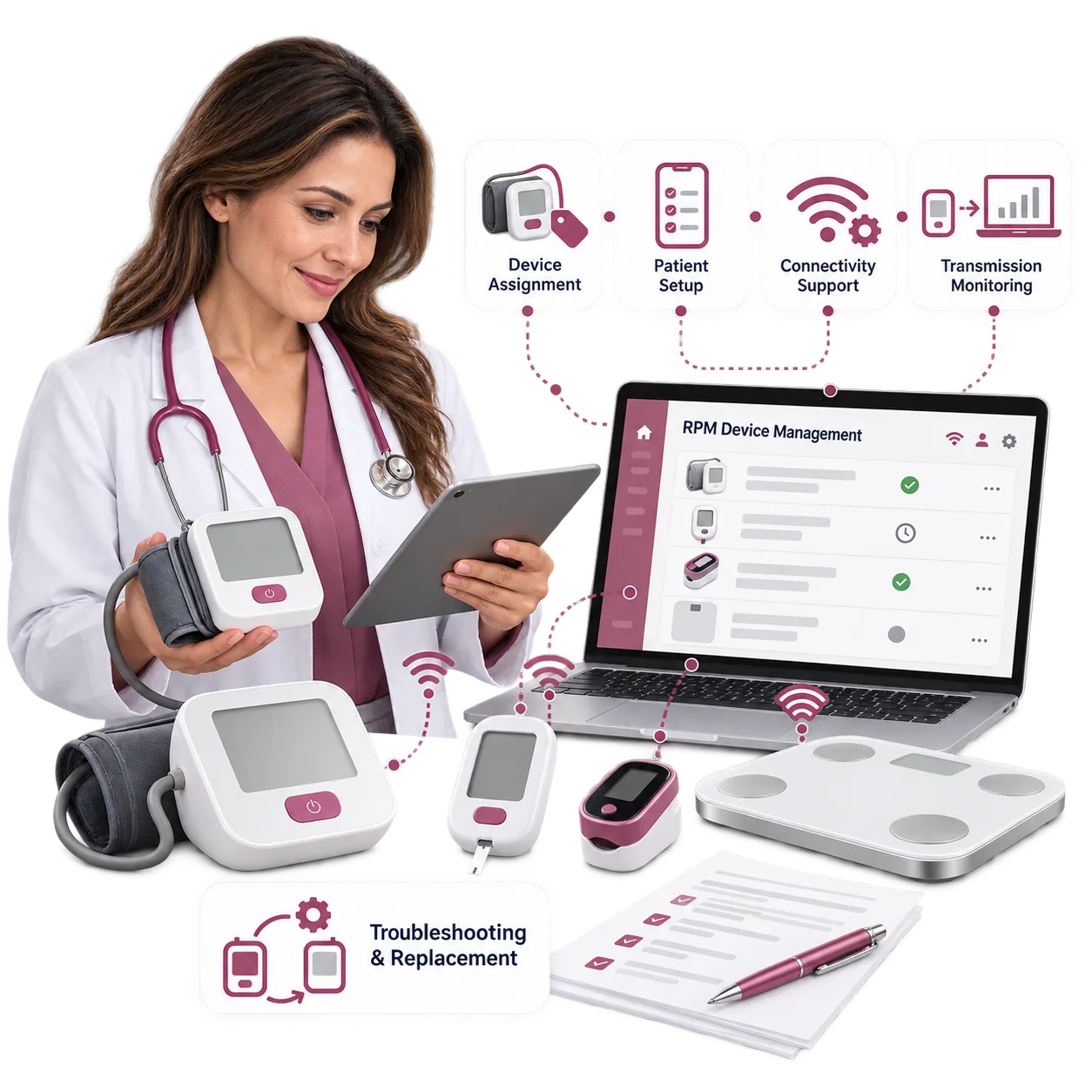
Connected devices are an important part of RPM because they collect and transmit patient physiologic information.
Device-related workflows may include:
The specific device and technical requirements depend on the RPM platform and program used by the healthcare organization.
Collecting patient data is only one part of Remote Patient Monitoring.
The data must be available for appropriate clinical review according to the established RPM workflow.
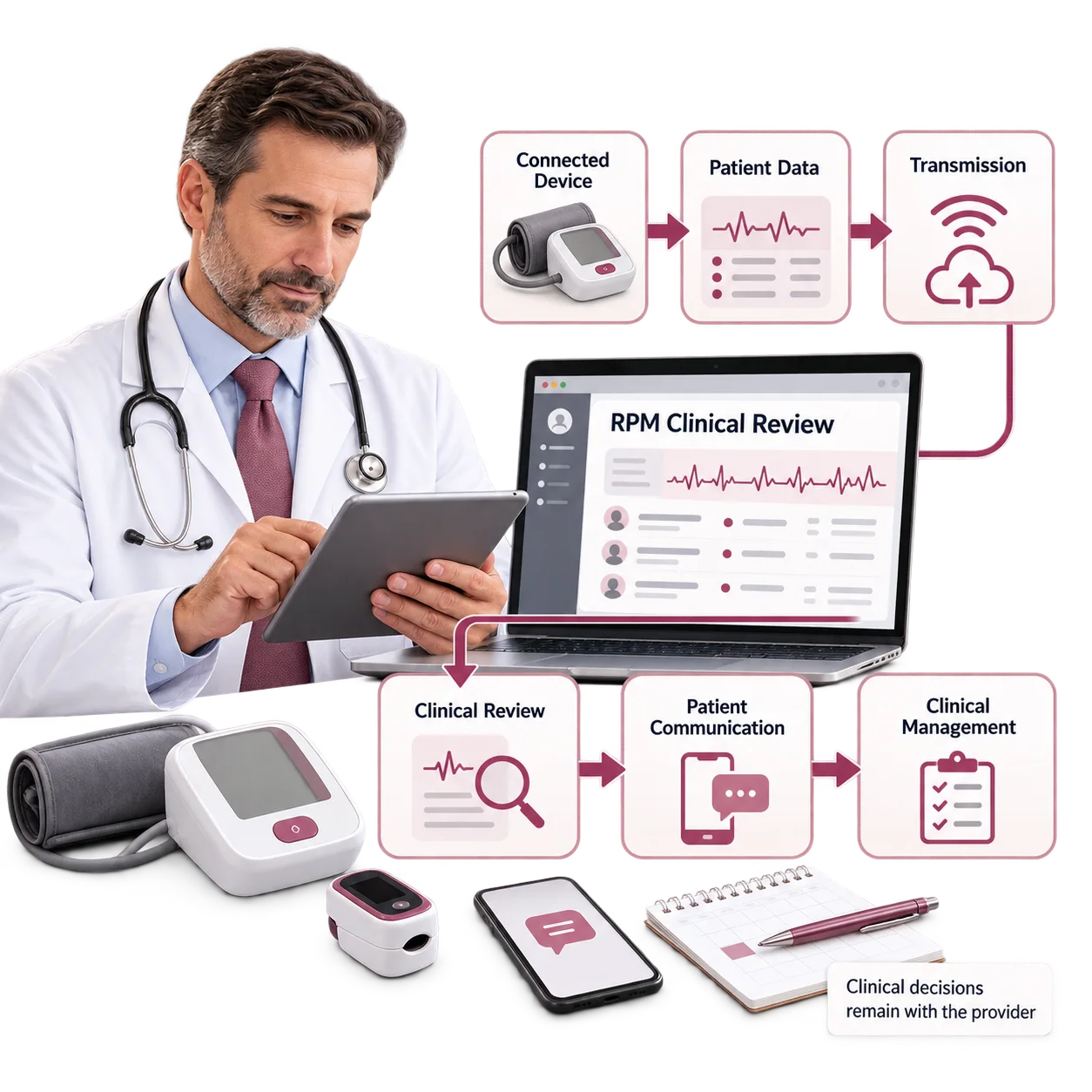
A simplified process is:
Patient → Connected Device → Physiologic Data → Data Transmission → Clinical Review → Patient Communication → Clinical Management
Healthcare Revenues supports the operational processes around this workflow while the healthcare provider and appropriate clinical staff remain responsible for clinical decisions.
Clear responsibilities and documented follow-up steps help keep the RPM workflow organized. Operational support may include tracking data availability, routing information to the designated clinical team, and documenting communication so pending tasks remain visible.
RPM billing requires appropriate documentation and compliance with applicable coding, time, service, and payer requirements.
CMS has specific requirements for Medicare RPM services, including requirements related to medical necessity, eligible devices, data collection, interactive communication, and time-based services. The applicable requirements depend on the service and billing code. (cms.gov)
Healthcare Revenues supports RPM documentation and billing workflows based on the services performed and applicable requirements.
Organizations should maintain appropriate documentation supporting the RPM services billed.
RPM also has a revenue cycle component.
A simplified RPM billing workflow is:
Patient Enrollment → Device Setup → Data Collection → Monitoring → Documentation → Claim Preparation → Claim Submission → Payment Posting → A/R Management
Issues at any stage may affect the billing process.
For example, incomplete documentation or missing information may create additional work during claim preparation or payer review.
Healthcare Revenues connects RPM operational support with applicable billing and revenue cycle processes.
Remote Patient Monitoring
RPM focuses on remotely collecting and managing patient physiologic data through connected medical devices.
Chronic Care Management
CCM focuses on ongoing care management and coordination for patients with qualifying chronic conditions.
A patient may receive one service, the other, or both when the applicable requirements are met and the services are appropriately provided and documented.
Healthcare organizations should evaluate the specific requirements before billing either service.
Healthcare organizations may encounter challenges such as:
A structured RPM workflow helps organizations maintain consistency across these activities.
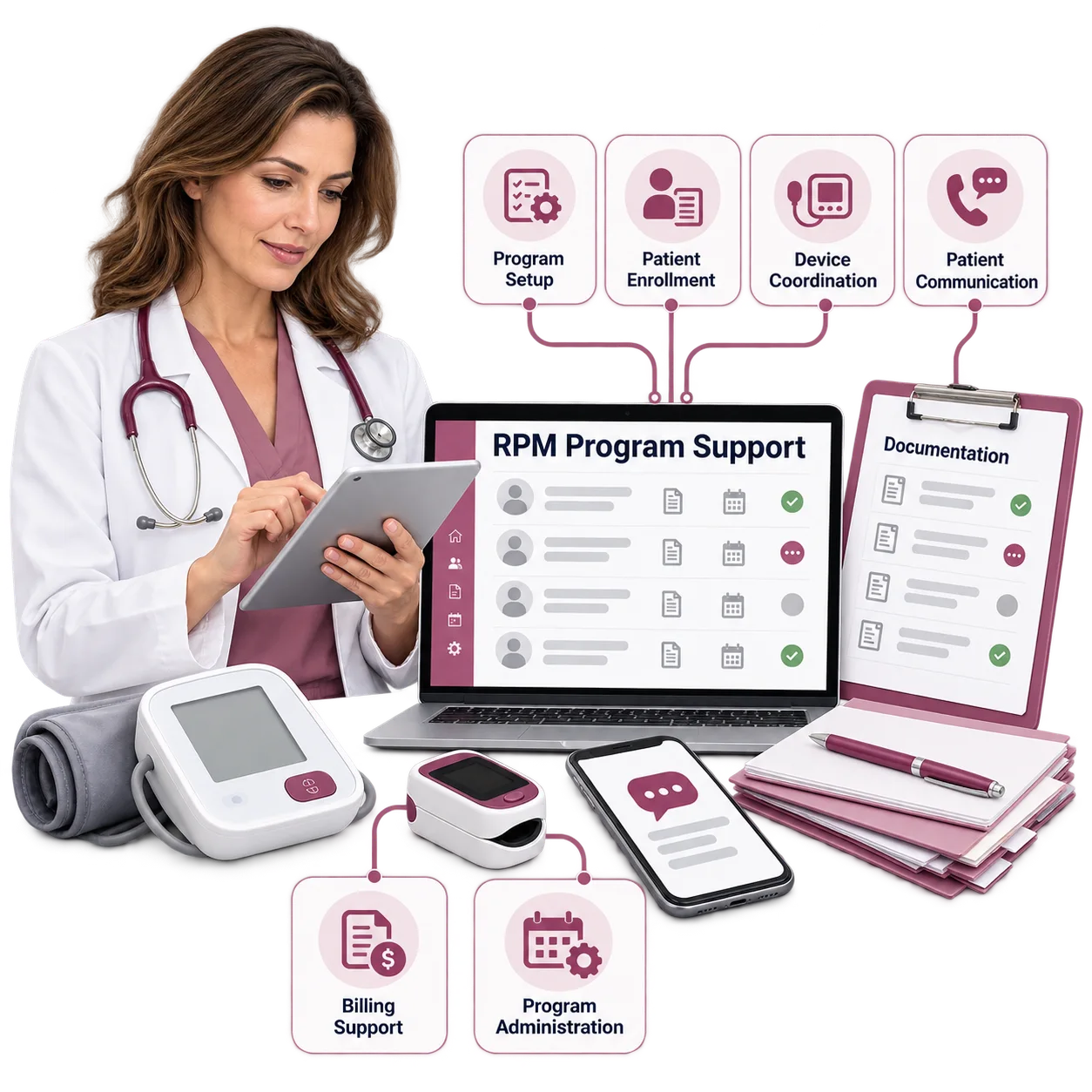
Healthcare Revenues supports organizations that need assistance with:
The specific scope depends on the organization’s existing RPM infrastructure and requirements.
Healthcare Revenues provides RPM support for:
RPM workflows vary based on patient population, clinical specialty, technology platform, payer mix, staffing, and program structure.

Healthcare Revenues brings approximately 15 years of healthcare industry experience to the organizations we serve.
Our approach is results-oriented. We focus on the services we commit to providing, maintain clear communication, and avoid unrealistic promises.
RPM involves more than remote devices. Patient enrollment, device coordination, monitoring workflows, documentation, billing, and revenue cycle processes all need to work together.
Healthcare Revenues brings this broader healthcare operations and revenue cycle perspective to RPM support.

Yes. Medicare covers CCM for eligible patients under the applicable requirements of the Physician Fee Schedule.